



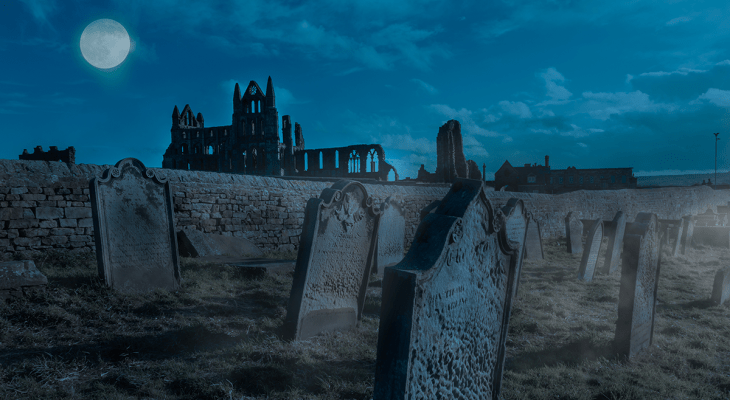
In May 1897, Bram Stoker released the Gothic horror classic Dracula – a tale of love, death, science and superstition, and the eternal struggle between good and evil. It is a novel loved by horror and literature fans worldwide to this day, and has inspired countless films and books. Among the greatest influences on Stoker’s story was one of Yorkshire’s favourite and most atmospheric seaside towns. You guessed it – Whitby.
In this guide, we will get our teeth into a brief exploration of the Dracula and Whitby connection, Stoker’s arrival in Whitby, locations around the town that inspired him, and where the name ‘Dracula’ came from. We’ll then move on to the best things to do in Whitby for a ghoulish (and fun) Dracula experience.
A Brief Exploration of the Dracula and Whitby Connection
Bram Stoker’s Arrival in Whitby
Bram Stoker’s first visit to Whitby was in the summer of 1890, after a friend recommended the seaside town as a place to recover after undertaking a demanding role as a theatre manager at London’s Lyceum Theatre. As is the case with many of us who have visited Whitby, it wasn’t long until he was quickly bewitched by the town’s charm and haunting beauty.
His place of residence was Mrs Veazey’s Guesthouse at 6 Royal Crescent, which was located above the harbour (you can still visit the building, which we will discover later on).
While he was waiting for his wife and infant son to join him, Stoker had a week alone to explore the town. Each morning, he would stroll down from the genteel Crescent to the old town, allowing him to take in views that had thrilled and inspired artists and writers for decades.
Gothic Landscapes and Landmarks
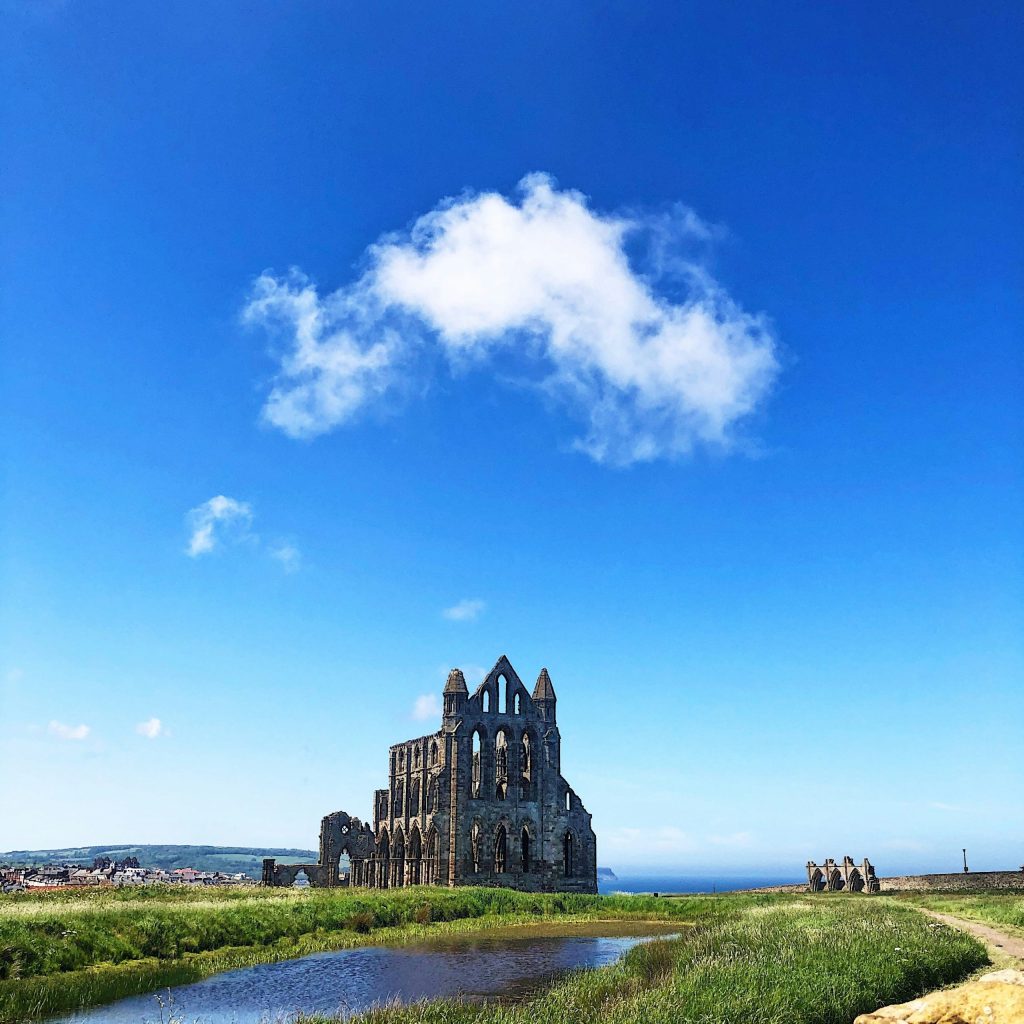
There were many locational influences Stoker gathered during his stay in Whitby throughout the book. First of all, you have the skeletal ruins of Whitby Abbey, which loom over the town. Once a great Benedictine monastery, it has been battered by storms but still displays a majestic Gothic beauty.
Mina Murray, the book’s heroine, records in her diary a description of Whitby Abbey:
‘Right over the town is the ruin of Whitby Abbey, which was sacked by the Danes, and which is the scene of part of “Marmion,” where the girl was built up in the wall. It is a most noble ruin, of immense size, and full of beautiful and romantic bits. There is a legend that a white lady is seen in one of the windows”.
Standing beside it is the parish Church of St Mary, which visitors reach by climbing the 199 steps. Stoker would often wander around the graveyard, noting down names and epitaphs. It was one of these names he gave to Dracula’s first Whitby victim – Mr Swales.
The novel also portrays Whitby as the Count’s point of entry into England when a Russian ship named the Demeter was wrecked in a storm off the coast, with all the crew perished. The only survivor was a great black dog that bounded up the 199 Steps to the Abbey. However, this was no ordinary dog; it was Dracula in disguise, discovering his new hunting ground.

Stoker would likely have drawn inspiration from a real-life shipwreck that happened a few years before he arrived in Whitby. In October 1885, a Russian ship named Dmitry was one of two great vessels which ran aground at Whitby during what was described as ‘a storm of great violence’ by contemporary newspapers.
Inspiring that Famous Name
You may be asking – ‘Where did Stoker get the idea for the name ‘Dracula’?’. You guessed it, right here in Whitby. On the 8th August 1890, he walked to the Coffee House End of the Quay and entered the library. Here, he found a book entitled ‘An Account of the Principalities of Wallachia and Moldavia’ by William Wilkinson.
It was within this book that he read about a 15th-century prince, Vlad Tepes (more commonly known as Vlad the Impaler), who, as his name suggests, was famous for impaling his enemies. Stoker noted that he was known as ‘Dracula’, meaning ‘son of the dragon’ in Wallachian. It can also be translated as ‘Devil’. Through this discovery, the name of the world’s most famous immortal vampire was born.
This trip to Whitby became the spark that would ignite the writing process of one of the most highly-regarded Gothic novels ever written. While he would spend another six years researching locations around Transylvania, some of the novel’s most memorable scenes, and not to mention the development of the Vampire’s name, can be traced directly to the summer he spent in Whitby.
Best things to do in Whitby for the Ultimate Dracula Experience
For fans of horror, history, and literature, one of the best things to do in Whitby is to explore the various locations with connections to Bram Stoker’s legendary novel. So, if you are planning the ultimate spine-chilling Dracula and Whitby experience, here are our top recommendations:
1. Visit 6 Royal Crescent
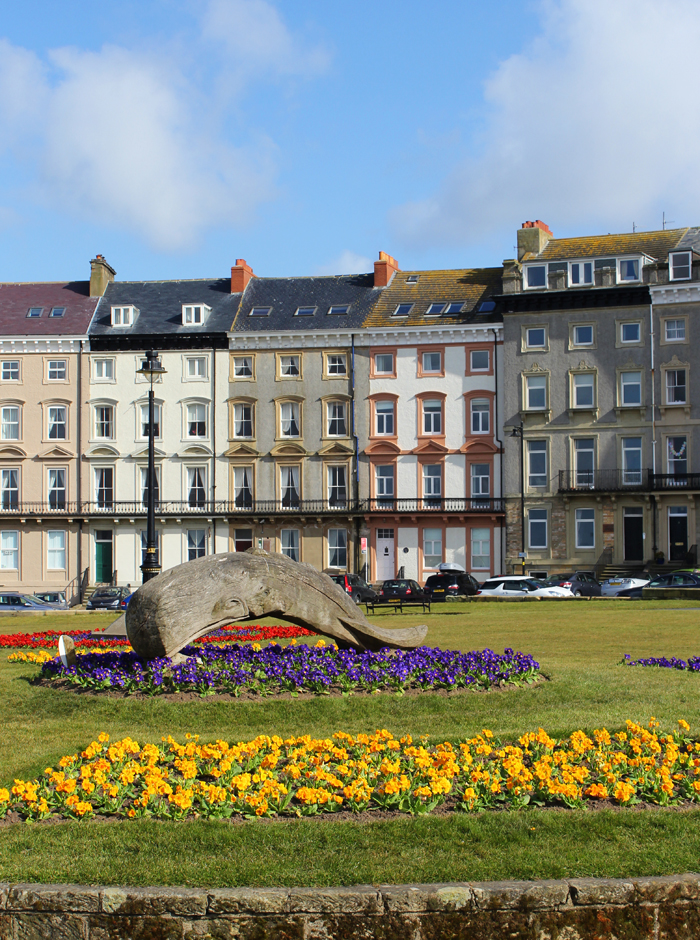
If you really want to immerse yourself fully in the Dracula and Whitby connection, then you can stay in the building formerly known as Mrs Veazey’s Guesthouse at 6 Royal Crescent. Named ‘Bram’s View’, this self-catering apartment has been lovingly restored to its former glory and provides a beautiful place to stay while on your Gothic adventure.
If you are not staying, it is well worth viewing this eye-catching building from the outside. You won’t miss it, especially as it has a blue plaque to celebrate Bram Stoker’s life and his stay at the guesthouse.
2. Take a Walk on Tate Hill Pier
Tate Hill Pier has a special role in the town’s history, from safeguarding local fishing to its spooky connection with Dracula. While the original pier is said to have dated back to 1190, it has been redeveloped and rebuilt several times, with the current structure built in 1632. It gives you the chance to imagine one of the novel’s most dramatic scenes – the crashing of the Demeter onto the beach with its mysteriously deceased crew.
3. Race up the 199 Steps to Whitby Abbey and St Mary’s Church
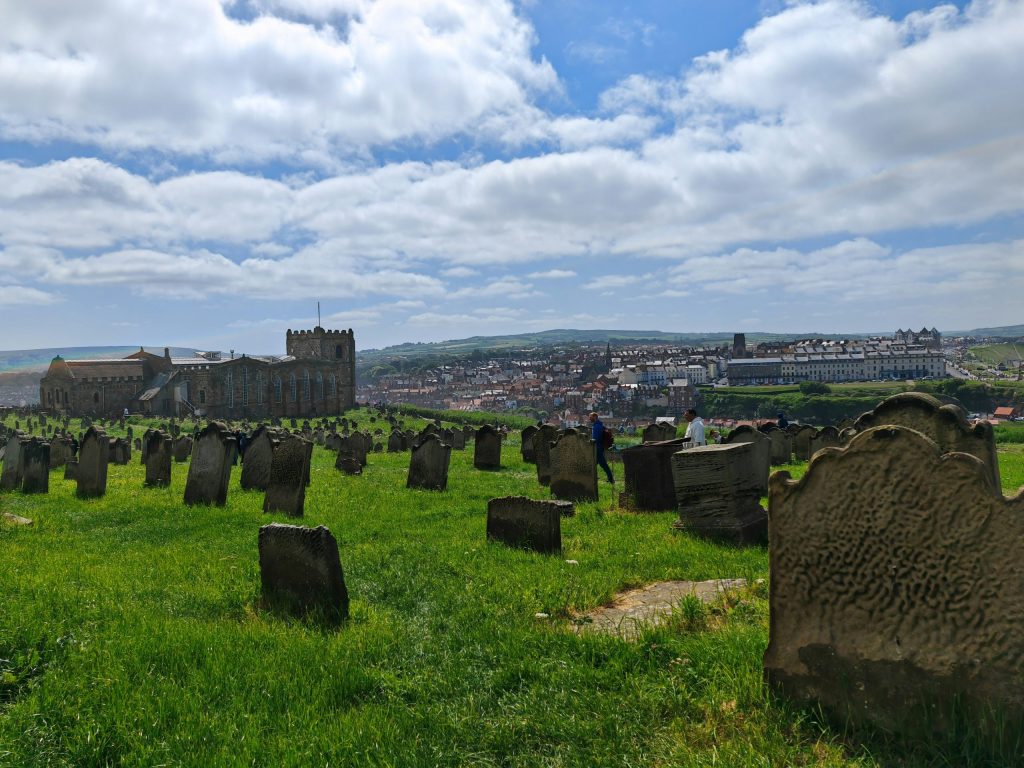
Follow in the footsteps of Count Dracula and race up (or you can walk, it is a lot of steps!) Whitby’s famous 199 steps, just as he did following the wreck of the Demeter. As you climb, you’ll experience some incredible views of the town that helped inspire the novel. Once you reach the top, you will be able to explore the Gothic ruins of Whitby Abbey and St Mary’s Church.
For more information about Whitby’s famous landmarks, discover our guide –
Is Whitby Worth Visiting? 8 Reasons You’ll Love This Seaside Gem
4. Get Spooked on a Whitby Walk
Want to explore the Dracula locations with one of the best (and scariest) storytellers in town? We know the answer is yes, so join Dr Crank for the ‘In Search of Dracula’ tour. They take place on Wednesday and Sunday nights, and you will learn all about the ghost stories that inspired Stoker, life in Victorian Whitby, and, of course, the Count himself.
If you need any more convincing, Dr Crank’s walks have been awarded the ‘Travellers Choice’ certification on TripAdvisor, meaning they are in the top 10% best walks worldwide.
5. Dare to Enter The Dracula Experience
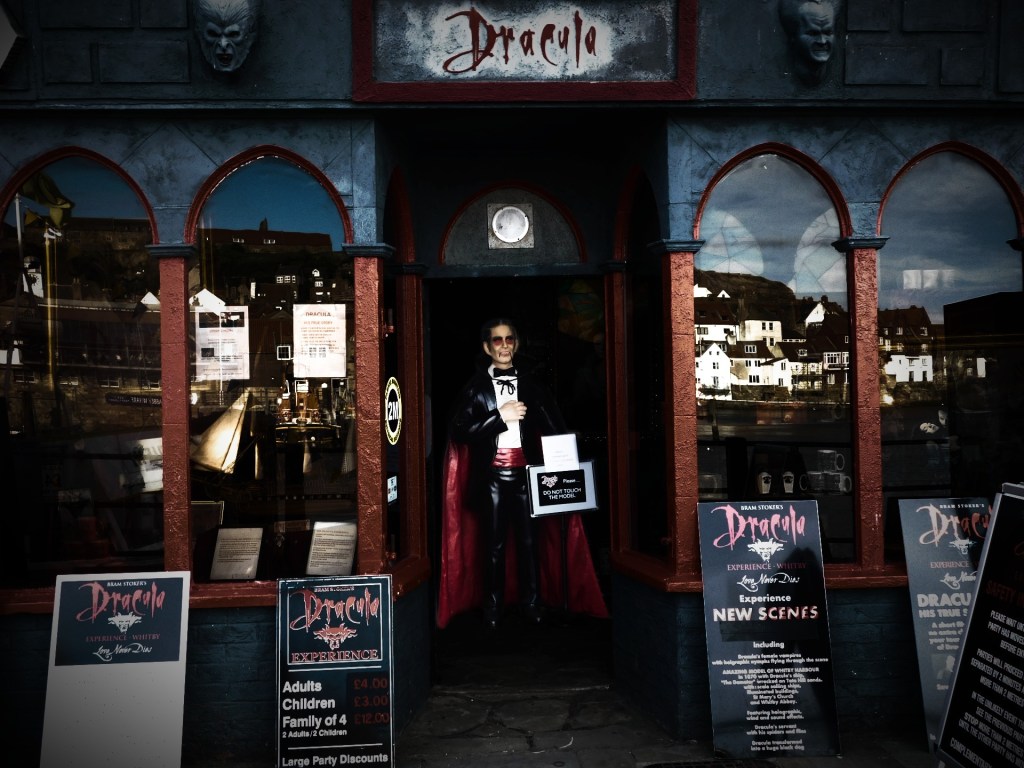
Want something spooky but fun to add to your itinerary? Then the Dracula Experience in Whitby offers a thrilling walk-through attraction that brings the legendary vampire to life. The Dracula Experience blends animated scenes, special effects, and live actors, taking visitors into the creepy world of Dracula while exploring the key role Whitby played in inspiring the novel.
As you step inside, you’ll encounter the haunting story of the Russian schooner Demeter. You’ll relive the moment a great black dog leapt ashore to bound up the famous 199 steps to the Abbey – the arrival of Count Dracula on these shores. There’s also an in-house cinema revealing the chilling history of the real ‘Dracula’, Vlad Tepes, whose bloody deeds in Transylvania inspired Stoker’s fictional horror legend.
Offering a mix of history, legend, and the town’s famous gothic atmosphere, the Dracula Experience in Whitby is the perfect way (and highly affordable) to discover more about how it inspired the creation of the world’s most famous vampire.
Ready to Experience the Dracula and Whitby Connection Yourself?
We hope you enjoyed reading our guide on the Dracula and Whitby connection. If you’re a fan of gory, Gothic tales, or just love being spooked, you’ll definitely enjoy exploring and uncovering the town’s dark literary legacy and walking in the footsteps of the world’s most famous vampire.
Want to find out more about Whitby? Then discover our Whitby Archives for more intriguing insights into this magnificent seaside town.
Read More: 9 Of The Best Whitby Restaurants You Need To Visit
Featured image: Radek Sturgolewski – stock.adobe.com