
We knew we were heading for somewhere truly remote, but as we drive through Hubberholme and towards the house, there’s a slight feeling of hesitation to drive forward. We’re about to commit to five days in one of the National Park’s most remote farmhouses – one left untouched for generations before the Landmark Trust rescued it from destitution. The draw of its 17th century charm and the opportunity to enjoy a piece of Yorkshire Dales history uninterrupted lures us in, regardless.
The track is long, rugged, and most definitely not designed for the Audi A1 clan. Fortunately, we aren’t members of that particular gang, so our high wheel base troupers on down unscathed, before we reach the large farm gates at the side of the River Swale. This must be where we abandon our car to take the rest of the journey on foot. The wheelbarrow kindly left for us confirms this.
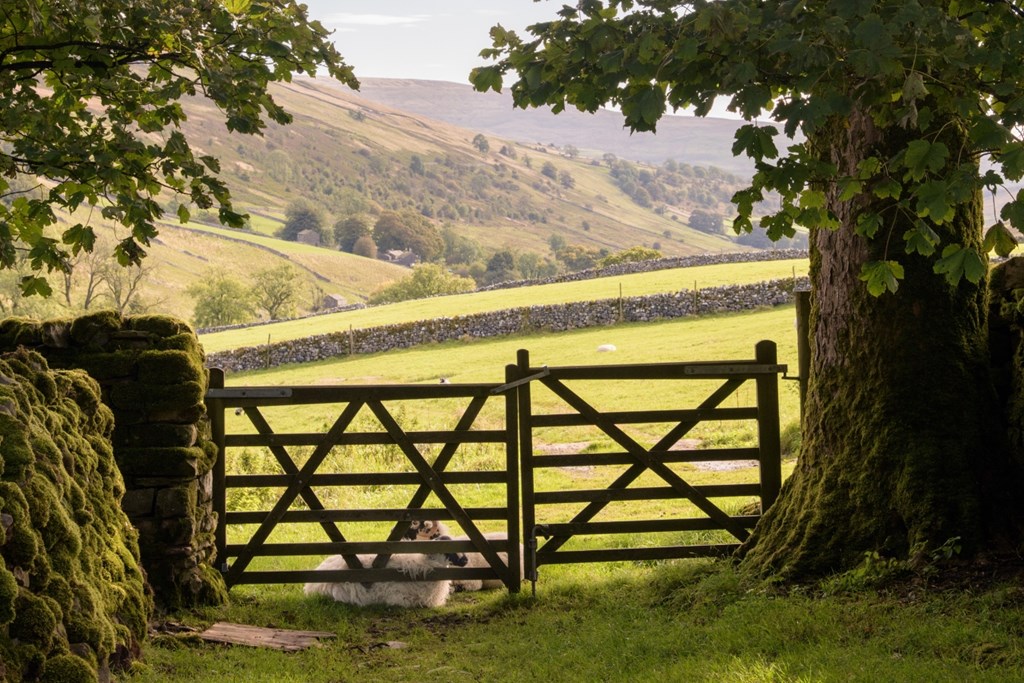
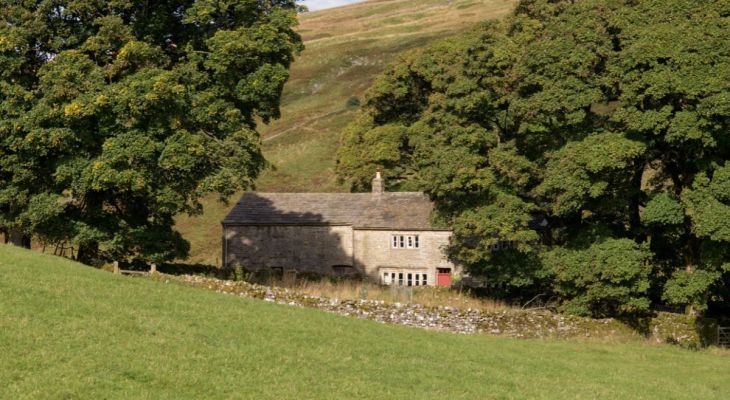
A short 400 metre slog uphill reveals our first glimpse of Cowside, a postcard-worthy farmhouse surrounded by sheep fields and the dramatic hills of Langstrothdale – the lesser known valley that the house sits within.
There’s nothing else in sight. It really is just us, the Dales and the elements up here. The introvert in me feels at peace at escaping society at long last. Rural Yorkshire has welcomed me with open arms. Passing through the gate, I feel as though I’m entering a life of mine from an alternate universe – one where sheep and pigs and chickens welcome me home from down the Dale, but entering the house itself feels like transporting to another era altogether.
Delicately restored, Cowside has been lovingly preserved by the Landmark Trust – a building conservation charity that strives to rescue historic, at-risk buildings all over the country. Cowside being one of those lucky buildings, and one of the last remaining examples of unaltered 17th-century architecture in the Yorkshire Dales. Today, visitors can stay at their properties – which is just one of the ways to helps to generate revenue so the charity can continue their conservation work.
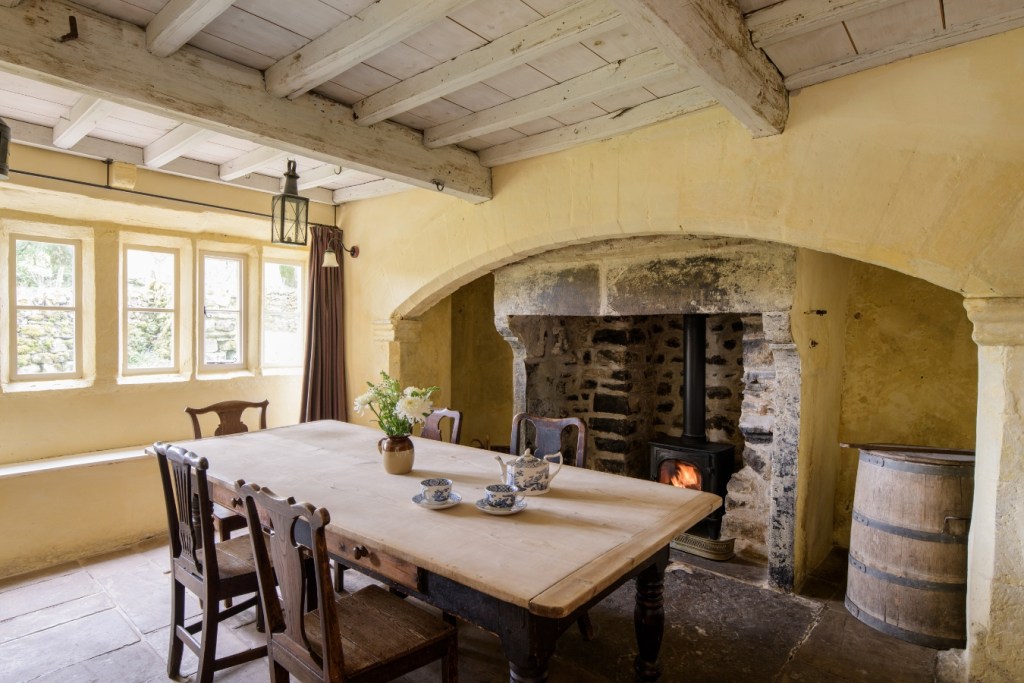
The hallway is the first of the many ‘wows’ I exclaim. It looks and feels completely original, as though I ought to crack out a gas lamp to navigate my way through the farmhouse like we’re in a bygone era. There’s not a single room in the house that doesn’t evoke that feeling – from the beautiful lime plastered walls throughout, to the carefully curated furnishings that feel as if they’ve always been there.
Of course, the house isn’t completely back in the 17th century. There are modern day luxuries including a new kitchen, central heating, plumbing and electricity. We are on holiday, after all – no pig pen pooping for us.
It’s unclear exactly when Cowside was built, but a date stone above the door reading ‘I S 1701’ suggests the house has stood for more than 325 years, only finding itself abandoned in the 20th century – with no road access, no electricity and none of the general services we rely on today for the conveniences of modern life. Thankfully, this stunning limestone structure stood defiant against the hands of time, surviving enough for the team at the Landmark Trust to take it on in 2009 – without which, the home would have crumbled into decay.
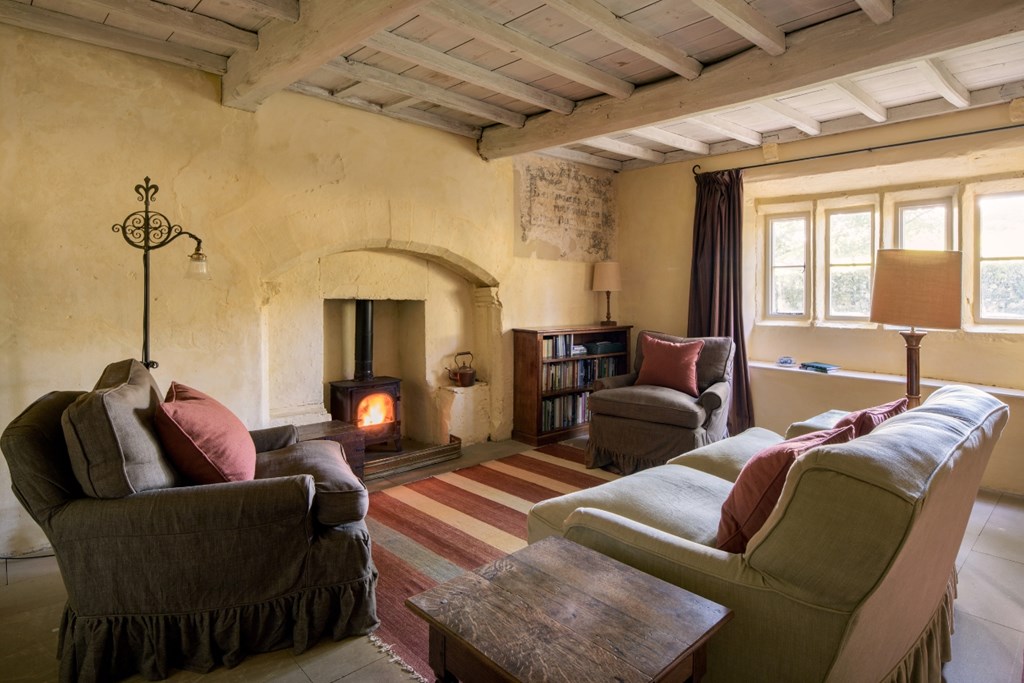
When night falls is when you start to feel truly alone at Cowside. Blessed with a stormy evening and zero light pollution nearby, all we can see for miles is the black, cloudy night sky, with only the sound of trees thrashing in the wind and rain water tip-tapping the window panes for company. Even the local sheep have moved on for the evening. It’s a true insight into what life must have been like for the farmers that previously occupied the house before it was abandoned around the mid-century. Without fire wood on-hand and surplus food in the pantry, you’d have been well and truly buggered during the hard winters.
With no signal or WiFi, we’re armed and ready with a few vintage films on our laptop for an evening curled up by the fire with a brew. We consider ourselves pretty hardy millennials, but tapping back into that pre-internet creativity certainly took a moment. Once we did channel it, however, there was no turning back.
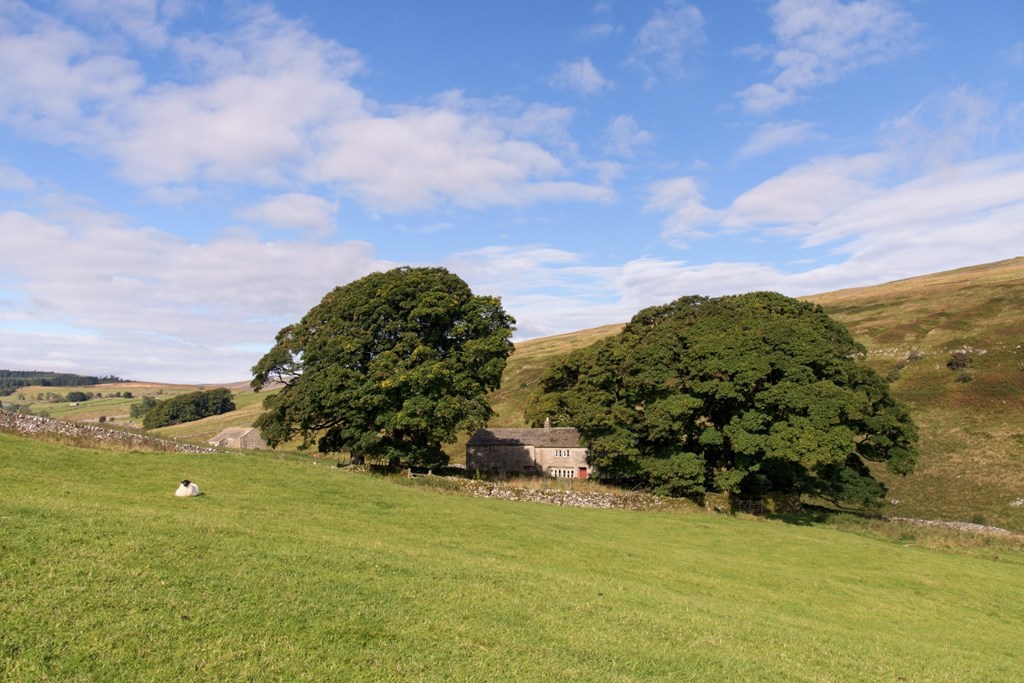
Mornings are extra special here. The opportunity to escape routine for a slow morning was most welcomed – the sound of curlews calling, sheep bleeting and the murmur of the river providing the soundtrack to breakfast cooking away on the hob. It’s the turn of the season during our visit, with glimpses of spring finally appearing, but the bite of winter lingering in the air. Wellies and knitwear are essential for morning coffees overlooking the sheep field. The local bird gang doesn’t seem too fussed by the slight frost. In fact, you’d be mistaken for thinking it was a bright spring morning the rate they’re playing, singing and flitting amongst the trees. It’s special here. It’s hard to imagine how one could possibly come to the conclusion of abandoning this home in the first place.
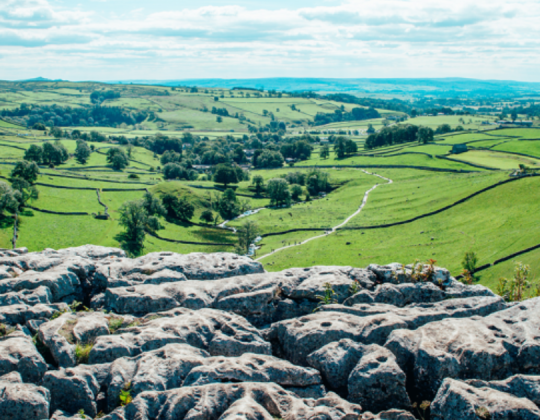
Found in the heart of the Yorkshire Dales, Cowside benefits from the National Park’s many highlights just an hour’s drive away, including Malham Cove, Swaledale, the Three Peaks and more, with Buckden, Kettlewell, Litton and the Dales Way closer to its doorstep.
To find out more about Cowside and the Landmark Trust’s other properties across the UK, visit the website here.
Read more: The Idyllic Yorkshire Dales Town Known as England’s ‘Book Town’