


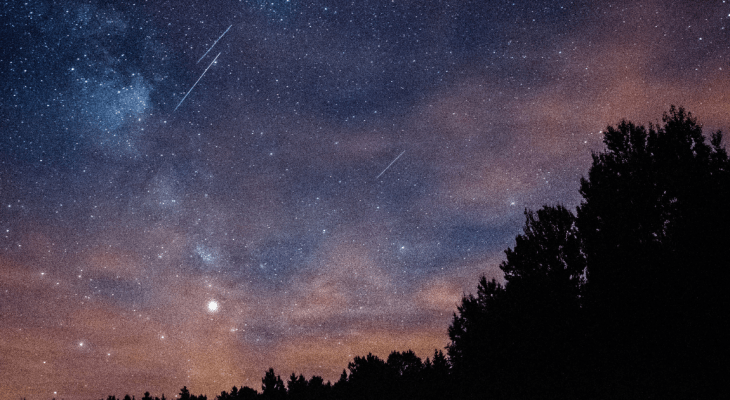
If you need an excuse to get out and stare at the sky, the oldest known meteor shower in the world is set to appear in the coming days. And if that’s not a reason, we don’t know what is. Skywatchers will know this marks the first major meteor shower of 2026, with the return of the Lyrids.
Expect bright, fast meteors streaking across the sky, with the chance of glowing dust trails lingering behind them. But when can we expect this spectacle? The Lyrid meteor shower will be active from tomorrow, 16th April, through to 25th April 2026, with a peak expected on 22nd April.
At peak time, observers could see around 18 meteors per hour under good conditions, with factors such as cloud cover, light pollution, and how dark your viewing spot is all affecting how many you’ll see. So, is it time to head to one of Yorkshire’s dark sky reserves? We think so.
As the best conditions for spotting the Lyrids are in darker areas away from street lights, such as open fields, hilltops, and coastal spots with unobstructed views, these make ideal locations for stargazing.
Timing is important too, with the Royal Observatory Greenwich stating that the best time to watch is after midnight, from around 2am onwards, once the moon has set.
The Lyrids are one of the oldest known meteor showers, with recorded sightings dating back more than 2,700 years. They are caused by debris from Comet C/1861 G1 Thatcher, which orbits the Sun roughly once every 415 years.
If that wasn’t enough, there’s also a bonus meteor event, the Eta Aquariids, which begin on 19th April and peak on 5th May.
Read More: This Quaint North York Moors Pub Is The Smallest In Yorkshire