



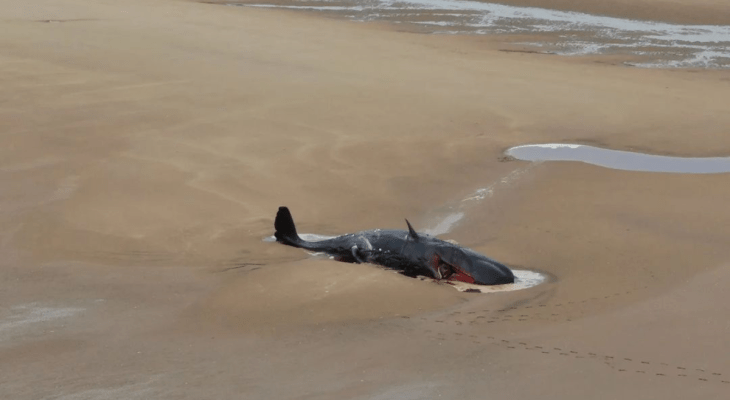
Two carcasses of sperm whales have been found on mud on the banks of the Humber estuary near Spurn Point. A third washed up on Humberston Fitties beach in Cleethorpes.
The Yorkshire Wildlife Trust (YWT) has said it is saddened by the deaths offering support to British Divers Marine Life Rescue. It’s not yet clear when the whales entered the estuary or whether or not they will be remove
The two sperm whales were washed ashore at a beach in the village of Skeffling. It is not currently known how they became stranded but the organisation said they sometimes starve in the North Sea because it is not deep enough for them to feed properly.
A spokesperson for Yorkshire Wildlife Trust said: “We’re very sad to hear about the stranding and subsequent death of these sperm whales on the Humber shore, away from Spurn National Nature Reserve near the neighbouring village of Skeffling.
“These are beautiful deep water mammals that can easily get into trouble when they move into shallower waters in the North Sea, and strong tides can then push them down the Humber estuary. We’ve offered our local knowledge and support to British Divers Marine Life Rescue and thank them for their quick response to this very sad case. Hopefully, subsequent tests can help explain why this happened,” Hull Live reports.
The British Divers Marine Life Rescue (BDMLR) has warned people to stay away from the dead whales. A spokeswoman told Yorkshire Live: “Network signal is poor and if anyone got in difficulty it puts strain on rescue agencies if they are having to save members of public from the mud, which could be avoided.
“Relevant agencies are aware of the whales’ location and we trust the general public will remain safe and sensible. It is not known at this time what the cause of death is or factors that may have influenced the stranding. It is nonetheless sad to see. Sperm whales are a deep diving species that struggle to feed in the relatively shallow North Sea.”
Read More: UK Set For First Heatwave ‘Hotter Than Madrid’ In 2024, According To Met Office
Feature Image Credit: a.p.s.drones


