




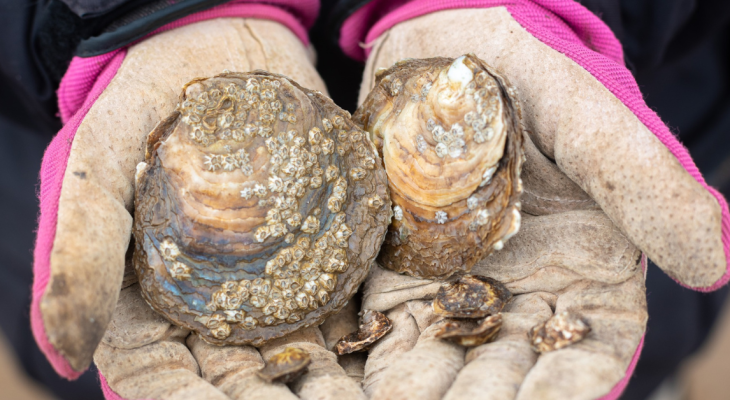
A major new wildlife initiative is set to reintroduce oysters to the Humber estuary over the next five years, as part of a pioneering conservation effort along the East Yorkshire coast. The project, the first of its kind in the UK, aims to tackle water pollution and restore a once-thriving native oyster population.
Using an innovative technique known as remote setting, oyster larvae are placed in tanks containing scallop shells, allowing them to attach before being moved to the estuary. This method will be compared with traditional approaches, where juvenile or adult oysters are placed directly on the seabed.
Oysters play a vital ecological role; a single oyster can filter and clean up to 200 litres (44 gallons) of water each day. Historic overfishing, disease, and declining water quality led to the collapse of the Humber’s oyster reef, which was once so vast it was considered a shipping hazard.
The project aims to reintroduce 500,000 native European flat oysters over five years. The first phase saw larvae transferred to an oyster nursery at Spurn Point, with an 18% survival rate — nearly double the 10% survival of oysters placed directly on the seabed.
Laura Welton, Native Oyster Restoration Officer at the trust, said: “Trialling this alongside the traditional method gives us vital insights into how to scale up restoration more efficiently and effectively. This experiment is a key step toward restoring thriving oyster reefs in the Humber, across the UK, and beyond,” the BBC reports.
Posting to Instagram the wrote: “Big news from the Humber Estuary. We’ve just launched a groundbreaking oyster reintroduction experiment, and it’s a UK-first! Wilder Humber is trialling a new method called remote setting, placing oyster larvae onto shells near their future home, and comparing it to traditional seabed restoration. Why? To bring back thriving oyster reefs – nature’s own water filters and coastal defenders.
“With a goal to reintroduce 500,000 native oysters in 5 years, we’re restoring a lost species and supporting biodiversity, cleaner seas, and climate resilience.”
Read More: 8 Of The Most Beautiful Nature Walks In East Yorkshire